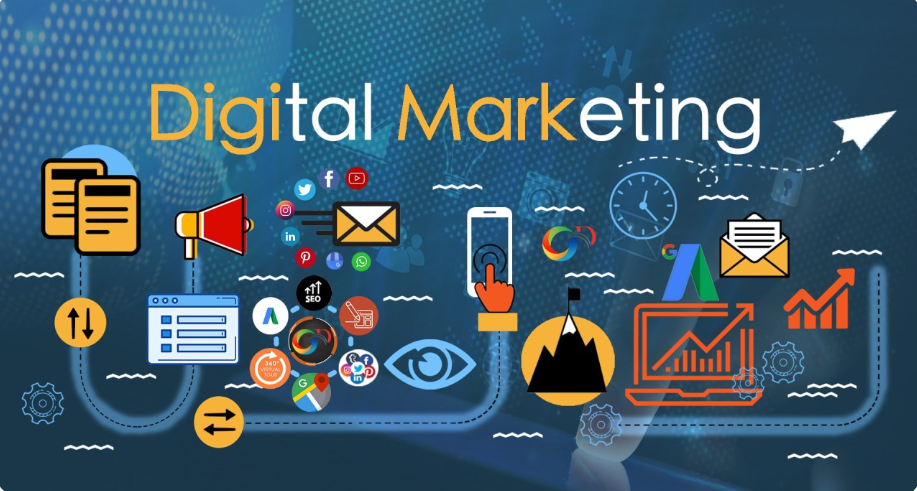
Digital Marketing is the promotion of goods, products and services using online platforms such as Instagram, Facebook, YouTube, LinkedIn, email, etc. Think of it as traditional marketing, instead of commercial advertisements published in papers, newspapers and billboards, you use digital tools and platforms to advertise your services. These two terms are often compared, as they are relevant but not necessarily similar.
Think of it this way: if a business wants to reach you where you already spend time (scrolling Facebook, searching Google, checking email), that’s digital marketing.
If you’re a student in Bangladesh (or anywhere) with no prior knowledge of digital marketing but you’re curious about digital marketing, this guide is for you. It’s long because marketing isn’t a “one-day magic” thing—it’s a skill you build step by step. And yes, it’s written in plain, human language, without AI-sounding jargon, so you can actually understand and use it.
What is Digital Marketing, actually?
The actual definition
Digital Marketing means promoting products, services, or brands using the internet and digital devices like phones and computers. The main idea is pretty simple: digital marketing helps businesses reach people where they already spend their time—online. The best part is that we can use data to see what is actually working, such as clicks, sales, and engagement, which is something traditional marketing cannot always measure easily.
Today, digital marketing is used by everyone, from individual freelancers and small local businesses to huge international brands. Since the internet became commercially popular in the 1990s, the industry has grown massively and is now worth billions.
A Brief History of Digital Marketing: How It All Started
Digital marketing didn’t appear overnight. It evolved alongside the internet, transforming how businesses reach customers.
Key Milestones in the History of Digital Marketing
| Year | Milestone | Impact on Digital Marketing |
|---|---|---|
| 1971 | First email sent by Ray Tomlinson | Laid the foundation for email marketing |
| 1990 | World Wide Web launched | Made websites and online content possible |
| 1994 | First clickable banner ad | Introduced online advertising and monetization |
| 1996 | SEO begins with early search engines | Businesses started optimizing for search visibility |
| 1998 | Google founded | Revolutionized search and gave rise to modern SEO |
| 2000 | Google AdWords launched | Enabled pay-per-click (PPC) advertising at scale |
| 2004 | Facebook launched | Opened the door to social media marketing |
| 2005 | YouTube launched | Created video marketing as a major channel |
| 2007 | iPhone released | Sparked the mobile marketing era |
| 2010s | Programmatic ads, automation, AI | Made digital marketing smarter, faster, and data-driven |
| 2020s | Privacy-first, AI-powered tools | Shifted focus to consent-based data and intelligent automation |
Forms of Online Marketing
In 2026, there are 8–10 core types of digital marketing that businesses and individuals use to grow online.
- Search Engine Optimization (SEO) — Optimizing your website or content to rank higher on Google without paying for ads.
- Pay-Per-Click Advertising (PPC) — Running paid ads on Google, Facebook, or other platforms where you pay only when someone clicks.
- Social Media Marketing — Building a presence and engaging audiences on platforms like Facebook, Instagram, TikTok, and LinkedIn.
- Content Marketing — Creating valuable blogs, videos, or guides to attract and educate your audience over time.
- Email Marketing — Sending targeted emails to subscribers to nurture leads, promote offers, or build loyalty.
- Video Marketing — Using platforms like YouTube, TikTok, or Instagram Reels to share engaging video content.
- Influencer Marketing — Partnering with popular creators to promote your product or service to their audience.
- Affiliate Marketing — Earning commissions by promoting other companies’ products and getting paid for each sale or lead.
- Display Advertising — Showing banner or image ads on websites across the internet.
- Mobile Marketing — Reaching users through SMS, push notifications, or in-app ads on smartphones.
These types of digital marketing can be grouped into three media categories:
- Owned Media — Your website, blog, email list, and social profiles (you control them).
- Paid Media — Ads you pay for (Google Ads, Facebook Ads, etc.).
- Earned Media — Organic mentions, shares, reviews, or press coverage you earn through quality work.
Traditional Marketing versus Online Marketing
Traditional marketing refers to promoting products or services through offline methods such as television advertisements, newspapers, magazines, radio, billboards, flyers, and brochures. It has been used for many years and is useful for reaching a large audience, especially through mass media. However, traditional marketing can be expensive, and it can be difficult to measure exactly how many people viewed or responded to an advertisement.
Digital marketing, on the other hand, refers to promoting products or services through digital platforms and the internet. It includes social media marketing, search engine optimization (SEO), email marketing, Google Ads, content marketing, websites, and influencer marketing. Digital marketing allows businesses to reach specific audiences based on factors such as interests, age, location, and online behavior. It is also easier to track results, communicate with customers, and make changes to campaigns quickly.
In simple terms, traditional marketing focuses on reaching people through offline media, while digital marketing focuses on reaching people through online platforms. Both methods can be effective, but digital marketing provides businesses with greater targeting, interaction, and performance tracking.
How Digital Marketing Actually Works
Digital marketing works by using online platforms to connect a business with the right audience. First, a business identifies its target customers and understands what they need or are interested in. Then, it creates useful content, advertisements, or offers and shares them through platforms such as Google, Facebook, Instagram, websites, email, and other digital channels.
Once the content reaches people, digital marketing focuses on attracting their attention and encouraging them to take an action, such as visiting a website, sending a message, signing up for a service, or making a purchase. Businesses can then track how people interact with their content using digital tools and data. Based on these results, they can improve their content, advertisements, and strategies to reach customers more effectively.
In simple words, digital marketing works by reaching the right people online, engaging them with useful or attractive content, encouraging them to take action, and analyzing the results to improve future marketing efforts.
Advantages of Online Marketing
Digital marketing has become one of the easiest ways for a business to reach people without needing a huge budget. Instead of spending a lot of money on TV, newspapers, or billboards, even a small business or a beginner can promote their work through social media, websites, and other online platforms.
- Affordable: You can start with a small budget and increase your spending as your business grows.
- Reaches the right people: You can target people based on their interests, age, location, and online behavior.
- Easy to measure: You can see how many people viewed, clicked, shared, or responded to your content.
- Builds direct relationships: Social media, email, and messaging allow you to communicate directly with customers.
- Works 24/7: Your website and social media pages can introduce your business to people even when you’re not actively working.
- Helps small businesses compete: A creative social media page or well-planned campaign can give a small business visibility without requiring a massive marketing budget.
- Easy to improve: If something isn’t working, you can change your content, audience, or strategy instead of being stuck with one advertisement.
- Builds your brand: Consistent content helps people recognize your business and understand what makes it different.
The biggest advantage? Digital marketing gives you a chance to start small, learn from real results, and grow gradually—which makes it especially useful for students, freelancers, beginners, and small businesses.
Social Media Marketing
Social media marketing is probably one of the most familiar parts of digital marketing because most of us already spend time on platforms like Facebook, Instagram, TikTok, or LinkedIn. Businesses use these platforms to introduce themselves, share their products or services, communicate with customers, and build a recognizable identity. But social media marketing is more than simply uploading a picture every day and waiting for likes. A good social media strategy tries to understand what the audience actually wants to see. A small business, for example, might share helpful tips, behind-the-scenes content, customer reviews, product demonstrations, or entertaining posts instead of constantly saying, “Buy this.” When people find the content useful or relatable, they are more likely to remember the brand and eventually become customers. This is what makes social media powerful—it gives businesses the opportunity to feel less like a company talking at people and more like a person having a conversation with them.
The Importance of a Website
A website can be thought of as the digital home of a business. Social media may bring people’s attention to a brand, but a website gives them a proper place to learn more about it. Someone who discovers a business through Instagram might want to know what services it offers, who runs it, how to contact it, or what products are available. Instead of making that person search through dozens of social media posts, a well-organized website can provide all of that information in one place. A website also gives a business more control over how it presents itself. The design, colors, images, information, and overall experience can be created around the brand. For someone starting out in digital marketing, understanding websites is therefore useful because so many other digital marketing activities eventually lead people back to a website.
Understanding the Target Audience
One of the biggest lessons in digital marketing is that you cannot effectively market to everyone. Imagine trying to sell the same product to a teenager, a university student, a working professional, and a retired person using exactly the same message. It probably would not work very well because each person has different needs, interests, problems, and reasons for buying something. This is why marketers spend time understanding their target audience. They look at things such as age, location, interests, preferences, problems, and buying behavior. Once you understand who you are speaking to, your content becomes much easier to create because you know what kind of message might actually catch their attention. Good digital marketing is not simply about getting more views; it is about getting the right people to notice you.
The Role of Content
Content is one of the biggest parts of digital marketing because it is often what attracts people to a brand in the first place. Content can be a blog article, Instagram post, short video, infographic, email, product photograph, or even a simple helpful tip. But creating content does not mean filling the internet with random posts just to stay active. The content should have a purpose. Sometimes it should educate people, sometimes it should entertain them, and sometimes it should solve a problem they are experiencing. For example, a skincare brand could create content explaining how to build a simple skincare routine instead of constantly promoting its products. A digital marketer can then naturally introduce the brand’s products as part of the solution. When content actually helps people, they are more likely to trust the business. And honestly, trust is much more valuable than getting one random person to click a “Buy Now” button.
Online Marketing Tools
Digital marketing also involves a variety of tools that help marketers create, manage, and measure their work. Tools such as Canva can be used to create graphics, while Google Analytics can help understand website activity and Google Search Console can provide information about how a website appears in Google Search. Social media management platforms can make it easier to organize and publish content, while keyword research tools can help marketers understand what people are searching for online. At first, all these tools can feel a little overwhelming. There are so many names, dashboards, buttons, and numbers that it can feel like the computer is personally trying to test your patience. But you do not need to master everything at once. Learning one tool at a time and understanding why it is used is a much better way to develop practical digital marketing skills.
The Customer Journey
Digital marketing is also about understanding the journey a person takes before becoming a customer. Most people do not see an advertisement for something and immediately buy it. Usually, there are several steps in between. First, they become aware of a brand or product. Then they become interested, look for more information, compare their options, and eventually decide whether they want to take action. After purchasing, their experience with the business can determine whether they return again or recommend it to someone else. For example, a person might discover a clothing brand through an Instagram Reel, visit its profile, check the website, read reviews, compare prices, and finally place an order. Understanding this journey helps marketers create the right type of content at the right time instead of expecting one advertisement to do everything.
Measuring Digital Marketing Results
One thing I find especially interesting about digital marketing is that you do not have to rely completely on guesswork. Traditional advertising can sometimes make it difficult to know exactly how many people noticed an advertisement and what they did afterward. Digital marketing provides much more measurable information. Marketers can look at website visits, clicks, engagement, leads, conversions, sales, and other forms of data to understand how their campaigns are performing. If a particular advertisement receives thousands of views but very few people click on it, that tells the marketer something. Maybe the content is attractive but the offer is not convincing, or perhaps it is reaching the wrong audience. Instead of simply saying, “The campaign failed,” a marketer can study the data, find the problem, make changes, and try again. This process of testing and improving is a major part of becoming better at digital marketing.
Challenges of Digital Marketing
Although digital marketing has many advantages, it is definitely not as easy as it sometimes looks from the outside. Social media can make it seem like businesses become successful simply by posting a few attractive pictures, but there is usually much more happening behind the scenes. There is strong competition, trends change quickly, platforms regularly change their algorithms, and audiences can lose interest very easily. Creating good content consistently can also be tiring, especially when you are managing everything yourself. Beginners may also feel overwhelmed because there are so many different areas to learn. However, these challenges are also part of the learning process. You will not understand everything perfectly from the beginning, and you will probably make mistakes. That is normal. Digital marketing is a field where experimenting, making mistakes, learning from the results, and trying again can teach you more than simply memorizing definitions.
E-marketing for Beginners
For someone completely new to digital marketing, the best approach is not to try learning everything at once. Start with the basic concepts and then choose one area that interests you the most. You could begin with social media marketing, content creation, SEO, email marketing, or another area and slowly build your knowledge from there. Practice is also extremely important. Instead of only watching tutorials and taking notes, try creating a social media post, writing a small article, designing a simple advertisement, or analyzing the performance of a page. Even small projects can teach you things that theory cannot. In the beginning, you may look at your first design or campaign and think, “What was I even doing?”—and that’s completely fine. Your first attempt is supposed to be imperfect. The important thing is to keep practicing and improve with every attempt.
The Future of Digital Marketing
Digital marketing continues to change as technology and people’s online habits change. Artificial intelligence, automation, short-form video, personalized content, and data-driven marketing are already influencing how businesses communicate with their audiences. At the same time, people are becoming more selective about the content they trust and the brands they choose to follow. This means marketers cannot simply focus on selling anymore; they need to understand people, create valuable experiences, and build genuine trust. The tools may continue to change, but the basic idea remains the same: understand your audience, give them something valuable, and make it easy for them to connect with your brand. That is what makes digital marketing such an interesting field to learn, because there is always something new to discover.
Conclusion
Digital marketing is much more than posting on social media or running an advertisement. It is about understanding people, communicating with them through digital platforms, creating useful content, building trust, and using real results to improve your strategy. What makes it especially interesting is that you do not have to start with a huge company, a massive budget, or years of experience. You can start with something as simple as creating a page, learning how a platform works, experimenting with content, and gradually understanding what gets results. You will make mistakes along the way, but those mistakes can become some of your best lessons. Digital marketing is a journey of learning, testing, and improving—and there is still much more to explore beyond the basics covered in this article.