

So, you’ve built your website, added your content, and optimized your pages. Great—but is that enough to help your website become visible on Google?Not quite.There is another side of SEO that happens outside your website. This is known as Off-Page SEO.Off-Page SEO focuses on building your website’s reputation and authority through activities outside your own pages. Backlinks, brand mentions, guest posting, and online citations are some common examples.
Now, you might be thinking, “Okay, but how does someone else’s website help mine?”
That’s exactly what we’re going to explore.You don’t need to understand everything at once. We’ll take it step by step and look at how Off-Page SEO works, why backlinks matter, how link building is done, and what beginners should avoid.
By the end, you’ll have a much clearer idea of what happens outside your website and how those activities can support your SEO.
So, let’s step outside your website for a moment and see what happens there.
What is Off-Page SEO?
Off-Page SEO means improving your website’s position and reputation through activities that happen outside your website. While On-Page SEO focuses on things like your content, keywords, headings, and pages, Off-Page SEO focuses more on how other websites and people interact with your website.
Think about it this way: if your website is a new shop, having a beautiful shop and good products is important. However, when other people recommend your shop, mention it, or send customers your way, your reputation starts to grow. Off-Page SEO works in a similar way.
One of the biggest parts of Off-Page SEO is building backlinks. A backlink is a link from another website that points to your website. When relevant and trustworthy websites link to your content, it can help search engines understand that your website may be useful and worth discovering.
However, this doesn’t mean you should collect hundreds of random links just because they are links. Quality matters more than quantity. A useful link from a relevant and trustworthy website can be much more valuable than a large number of poor-quality links.
Some common Off-Page SEO activities include:
- Backlinks: Getting links from other websites to your pages.
- Link Building: Creating opportunities to earn relevant and useful backlinks.
- Guest Posting: Publishing useful content on another website while gaining an appropriate link or brand mention.
- Brand Mentions: Getting your business or website mentioned online, even when a direct link isn’t always included.
- Online Directories: Listing your business on relevant and trustworthy directories.
- Local Citations: Mentioning your business name, address, and other details on relevant local platforms.
- Digital PR: Promoting useful stories, information, or announcements to gain attention and mentions.
So, in simple words, Off-Page SEO is about building trust beyond your own website. The more your website becomes known, referenced, and connected to relevant online sources, the stronger your overall online presence can become.
But before you start hunting for backlinks everywhere, there’s one thing you should understand first: why do backlinks actually matter?
What Are Backlinks?
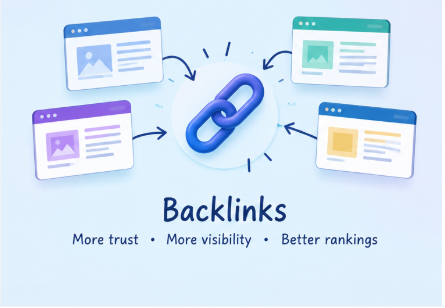
Let’s start with one of the most important parts of Off-Page SEO: backlinks.
A backlink is simply a link from one website to another. For example, if another website writes an article and adds a link to your website, your website has received a backlink. It sounds simple, right? But not every backlink has the same value.
A link from a relevant and trustworthy website can be useful because it shows that another website is willing to reference your content. On the other hand, getting links from unrelated, low-quality, or suspicious websites may not help your website at all.
Why Do Backlinks Matter?
Think of a backlink as an online recommendation. If a website that already has a good reputation points its visitors toward your content, it can help your website gain visibility and credibility.
Backlinks can help with:
- Discoverability: Search engines can discover your pages through links from other websites.
- Authority: Relevant, trustworthy backlinks can contribute to your website’s overall authority.
- Referral Traffic: People can click the link and visit your website directly.
- Brand Exposure: Your website can be introduced to people who may not have found it otherwise.
- SEO Performance: A strong backlink profile can support your website’s ability to compete in search results.
However, don’t fall into the trap of thinking “more backlinks = better SEO.” That’s not how it works.
A few relevant and trustworthy backlinks can be more valuable than hundreds of random links. Therefore, when you’re working on Off-Page SEO, focus on earning useful links rather than collecting links for the sake of having them.
Now that you understand what backlinks are, the next question is pretty obvious:
How do you actually get them?
That’s where link building comes in.
What Is Link Building?
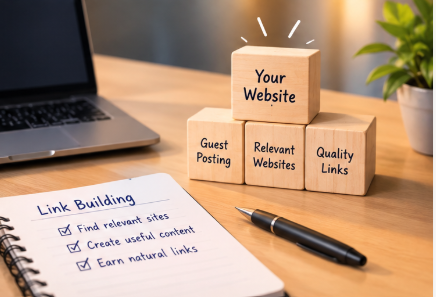
Now that you know what backlinks are, let’s talk about link building.
Link building is the process of getting other websites to link to your website. It is one of the most important parts of Off-Page SEO because good links can help your website become more visible and trusted.
But here’s the catch: you can’t just ask every website on the internet to link to you. The link should make sense and come from a relevant source.
For example, if you run a website about digital marketing, a backlink from a website that talks about marketing, business, or technology would make more sense than a link from a completely unrelated website.
Some common ways to build links include:
- Guest Posting: Write useful articles for other relevant websites and include an appropriate link to your own website.
- Creating Shareable Content: Helpful guides, original research, infographics, and useful resources are more likely to be shared or referenced.
- Business Directories: Add your business to relevant and trustworthy online directories.
- Digital PR: Get your brand or useful content noticed through online publications and media.
- Resource Pages: Find relevant pages that collect useful resources and suggest your content when it genuinely adds value.
- Building Relationships: Connect with website owners, creators, and people in your industry. Sometimes, a genuine relationship can lead to a natural mention or backlink.
The main goal is not to build as many links as possible. Instead, focus on creating useful connections that make sense for your website and your audience.
And remember, good link building takes time. If someone promises you thousands of backlinks overnight, that’s usually a giant red flag wearing a tiny SEO hat.
Next, let’s look at something beginners often get confused about: quality vs. quantity of backlinks.
Quality vs. Quantity of Backlinks
When it comes to backlinks, it’s easy to think that more is always better. But in SEO, that isn’t necessarily true.
Getting hundreds of backlinks might sound impressive, but if most of them come from unrelated or low-quality websites, they may not provide much value. Instead, focus on earning links that are relevant, natural, and genuinely useful.
What makes a backlink valuable?
A good backlink usually comes from a website that:
- Is relevant to your topic or industry
- Has useful and trustworthy content
- Has a real audience
- Links to your content naturally
- Adds value for the reader
For example, imagine you write about digital marketing and a respected marketing website references one of your guides. That link makes sense because the two topics are connected.On the other hand, getting a random link from a website that has nothing to do with your topic simply for the sake of having a backlink isn’t a great strategy.
So, should you focus on quality or quantity?
Quality comes first.
You don’t need to collect links like you’re collecting Pokémon. Instead, try to build a smaller number of useful connections with relevant websites. A strong backlink profile is built gradually. As your content becomes more useful and your website gains attention, natural links can be earned over time. Backlinks aren’t the only way to build your presence outside your website. There are other methods that can help people discover and recognize your brand.
One of them is guest posting.
Guest Posting
So, we’ve talked about backlinks and link building. But how can you actually get your content in front of people who already visit other websites?
That’s where guest posting comes in.
Guest posting means writing an article for another website, usually one that is related to your topic or industry. When appropriate, you may be able to include a link to your own website, allowing interested readers to discover your content.
For example, if your website is about digital marketing, you could write a helpful article for another marketing or business website. If your content is useful to their readers, a link to your website may fit naturally within the article.
How can guest posting help?
- Builds backlinks: You may earn a relevant backlink to your website.
- Reaches a new audience: Your content can be seen by people who don’t know your website yet.
- Builds credibility: Being featured on relevant websites can help your brand look more established.
- Brings referral traffic: Readers can click your link and visit your website.
- Builds relationships: You can connect with other website owners and people in your industry.
However, don’t treat guest posting as a backlink collection game. Your first goal should be to provide something genuinely useful to the other website’s audience.
Also, avoid publishing the same article everywhere or choosing websites simply because they accept guest posts. A relevant, useful article on a genuine website is far more valuable than a pile of low-quality placements.
In short, good guest posting is about sharing value first and earning visibility naturally.
But what if nobody is publishing your article yet? You can still build your online presence through something much simpler: brand mentions.
How Brand Mentions Support Off-Page SEO
Not every Off-Page SEO result has to come from a backlink. Sometimes, simply getting your brand mentioned online can help people discover and remember your business.
A brand mention happens when another website, blog, social media account, or online platform talks about your business or website. A link may be included, but it doesn’t always have to be.
For example, imagine someone writes an article about useful digital marketing websites and mentions Web Learners Hub. Even if they don’t add a direct link, your brand has still been introduced to their audience.
Why are brand mentions useful?
- Increase brand awareness: More people get to know your business.
- Build online presence: Your brand starts appearing in different places across the internet.
- Reach new audiences: People who have never visited your website may discover it through someone else’s content.
- Build credibility: Being mentioned by relevant websites or creators can make your brand appear more established.
- Create future opportunities: A simple mention can sometimes lead to relationships, collaborations, or even backlinks later.
However, don’t try to get your brand mentioned everywhere just for the numbers. Relevance matters. A mention from a website or community related to your industry is generally more useful than being mentioned somewhere completely unrelated.
So, while backlinks remain an important part of Off-Page SEO, brand mentions can also help build recognition and trust around your website.
And there’s another simple way businesses can improve their online presence—online directories and local citations.
Online Directories and Local Citations in Off-Page SEO
If you’re running a local business, people need to be able to find you beyond your own website. This is where online directories and local citations can become useful.
An online directory is a platform where businesses can list information such as their business name, address, phone number, website, category, and services. Local citations work in a similar way by mentioning important business details on other websites or platforms.
For example, a local restaurant might list its business on a relevant directory with its address, phone number, website, and opening hours. Someone searching for restaurants in that area may then discover the business through that listing.
How can directories help with Off-Page SEO?
- Improve online visibility: Your business can appear on more platforms.
- Help people discover your business: Customers can find your details without visiting your website first.
- Build local presence: Consistent business information can strengthen your presence in local search.
- Create potential referral traffic: People can visit your website directly from a directory listing.
- Support credibility: Being listed on relevant and trustworthy platforms can make your business look more established.
However, don’t go around submitting your website to every directory you can find. Choose relevant and trustworthy platforms instead.
Also, make sure your business information is accurate and consistent. A different phone number on one platform and a different address on another can create unnecessary confusion for both customers and search engines.
So, directories and citations can be useful, but they should be treated as part of a wider Off-Page SEO strategy, not as the entire strategy.
And now that we’ve covered some of the ways your website can gain visibility outside its own pages, let’s look at another powerful approach: Digital PR.
Digital PR for Off-Page SEO
So far, we’ve looked at backlinks, guest posting, brand mentions, and online directories. But there’s another way to get people talking about your website: Digital PR.
Digital PR is about getting your brand, content, or useful information noticed by online publications, blogs, news websites, creators, or other relevant platforms. The goal isn’t simply to get a link. Instead, you’re trying to create something worth talking about.
For example, if you publish useful research, an interesting guide, or a helpful resource, another website may mention it in their own article. As a result, your brand can reach a completely new audience.
How can Digital PR help with Off-Page SEO?
- Builds brand awareness: More people can discover your brand.
- Earns mentions: Your website may be mentioned by relevant publications or creators.
- Creates backlink opportunities: Useful coverage can sometimes lead to natural backlinks.
- Reaches new audiences: Your content can travel beyond your existing followers.
- Builds credibility: Being featured by relevant and trustworthy sources can strengthen your online reputation.
The most important part is having something worth sharing. A boring piece of content is unlikely to get much attention just because you want a backlink.
Therefore, focus on creating useful information, original ideas, interesting data, or content that genuinely helps people. When the content provides value, sharing and mentions can happen more naturally.
Digital PR isn’t about shouting, “Hey, link to my website!” It’s about giving people a reason to talk about it.
And while building your reputation is important, you also need to understand another side of Off-Page SEO: how social media can help you connect your brand with a larger audience.
Social Media and Off-Page SEO
By now, you can probably see that Off-Page SEO is not limited to backlinks. Social media can also help your brand become more visible, especially when your content is shared, discussed, or discovered by new people.
Facebook, Instagram, LinkedIn, and other social platforms give you a place to share your content and communicate with your audience. While social media activity itself should not be treated as a direct replacement for backlinks, it can help more people discover your brand and your website.
How can social media support Off-Page SEO?
- Increases content visibility: Your articles and website pages can reach more people.
- Encourages sharing: Useful content may be shared with new audiences.
- Builds brand recognition: People become more familiar with your business.
- Creates engagement: Comments, discussions, and interactions can help you connect with your audience.
- Brings referral traffic: People can visit your website through social media posts.
- Creates opportunities: Social connections can eventually lead to collaborations, mentions, and backlinks.
The important thing is to avoid treating social media as a place where you simply drop your website link and disappear. Share something useful, start conversations, answer questions, and actually interact with people.
After all, Off-Page SEO is about building a reputation, and relationships are a big part of that.
Conclusion
Off-Page SEO might seem like a complicated part of digital marketing at first, but the basic idea is actually quite simple. You are trying to build your website’s reputation beyond your own pages by creating useful connections, earning mentions, and making your brand easier to discover.
You don’t need to chase hundreds of backlinks or try every strategy at once. Start with useful content, build genuine relationships, look for relevant link-building opportunities, and keep your business information consistent. Most importantly, focus on quality rather than quantity.
Remember, SEO doesn’t happen overnight. Your website’s authority is built gradually through consistent effort, useful content, and a strong online presence. Once you understand Off-Page SEO, you’re one step closer to understanding the bigger picture of SEO—and there’s still another important piece to explore: Technical SEO.